Pula Arena Amphitheater Entry Ticket
Step into Croatia's iconic Roman amphitheater and discover ancient gladiatorial history
Reserve
Hand-picked by our editors — only the best 5 experiences from 18 reviewed
Verified partners for every tour, free cancellation where available, and instant confirmation on every booking.
Step into Croatia's iconic Roman amphitheater and discover ancient gladiatorial history
Reserve
1 hr 15 min
Explore one of the Roman world's finest surviving arenas with an expert guide and descend into the hypogeum
Reserve
1 hr 30 min
Journey through 2,000 years of history at one of the world's best-preserved Roman amphitheaters
ReservePrices from verified partners. Availability updates in real time at checkout. Free cancellation policies apply where shown.
The landmarks, rooms, and views travelers on this tour remember — all visible on a single visit.
Explore the subterranean chambers once used to house wild animals and gladiators.
View the impressive cavea where 23,000 spectators once gathered.
See the rare, intact towers that provided structural stability and access.
Browse exhibits on ancient Istrian olive oil and wine production.
Stand at the center of the historic combat area.
They complement each other, but most visitors who do both find the arena offers a more singular, immersive scale compared to the open-air history of the forum. If you are securing amphitheater pula tickets, you gain entry to the world’s best-preserved Roman stone exterior, whereas the forum provides a decentralized walk through Pula landmarks.
| Feature | Top pick Pula Arena | Pula Forum |
|---|---|---|
Structure Type |
Enclosed stone amphitheater | |
Primary Focus |
Gladiatorial combat history | |
Estimated Time |
1–2 hours | |
Ticket Requirement |
10 EUR conservation fee | |
Accessibility Level |
Moderate (steep interior stairs) | |
Open Air Access |
Internal vaulted chambers | |
| See tickets → |
Verdict: Choose the arena for its monumental architecture and scale when purchasing amphitheater pula tickets tours, or prioritize the forum if you prefer free-roaming exploration among historical urban ruins.
Choose your ticket, select your date, and reserve in under two minutes. Secure checkout handled by our verified partner.
Instant confirmation by email, with a mobile voucher you can save offline. No printing, no queuing at a collection desk.
Arrive at the entrance, show your voucher on your phone, and walk in. Most tickets include priority or skip-the-line access.
Practical details for your visit straight from our verified partners — hours, access, rules, and how to get there.
Casual attire is recommended for exploring Pula Arena. Wear comfortable walking shoes as the stone surfaces and ancient steps can be uneven.
Avoid bringing large bags or luggage as there are no storage facilities. Security checks may occur during major event preparations.
Personal photography is permitted throughout Pula Arena. Commercial filming or professional drone use requires prior authorization.
Pula Arena is partially accessible. The underground museum and certain upper terraces have limitations due to original Roman architecture and gravel surfaces.
Mobile phones are permitted for personal use and audio guide access. Keep noise levels respectful of other visitors.
The site is family-friendly, though parents should supervise children closely on stone bleachers. Strollers may be difficult to navigate in the underground sections.
Consumption of food and drink inside the main arena is discouraged to protect the site. Bottles and jars are typically prohibited during major events.
Pets are generally not permitted inside the historical structure unless authorized as service animals.
Free audio guides are available via QR codes located at the entrance and specific points throughout the monument.
Best time to go, insider tips, nearby landmarks, and the cancellation fine print — flip through to skim what matters to you.
Flexible, no hidden fees.
Tickets are non-refundable. Please ensure your travel plans align with the 10 EUR entrance fee policy before purchase.
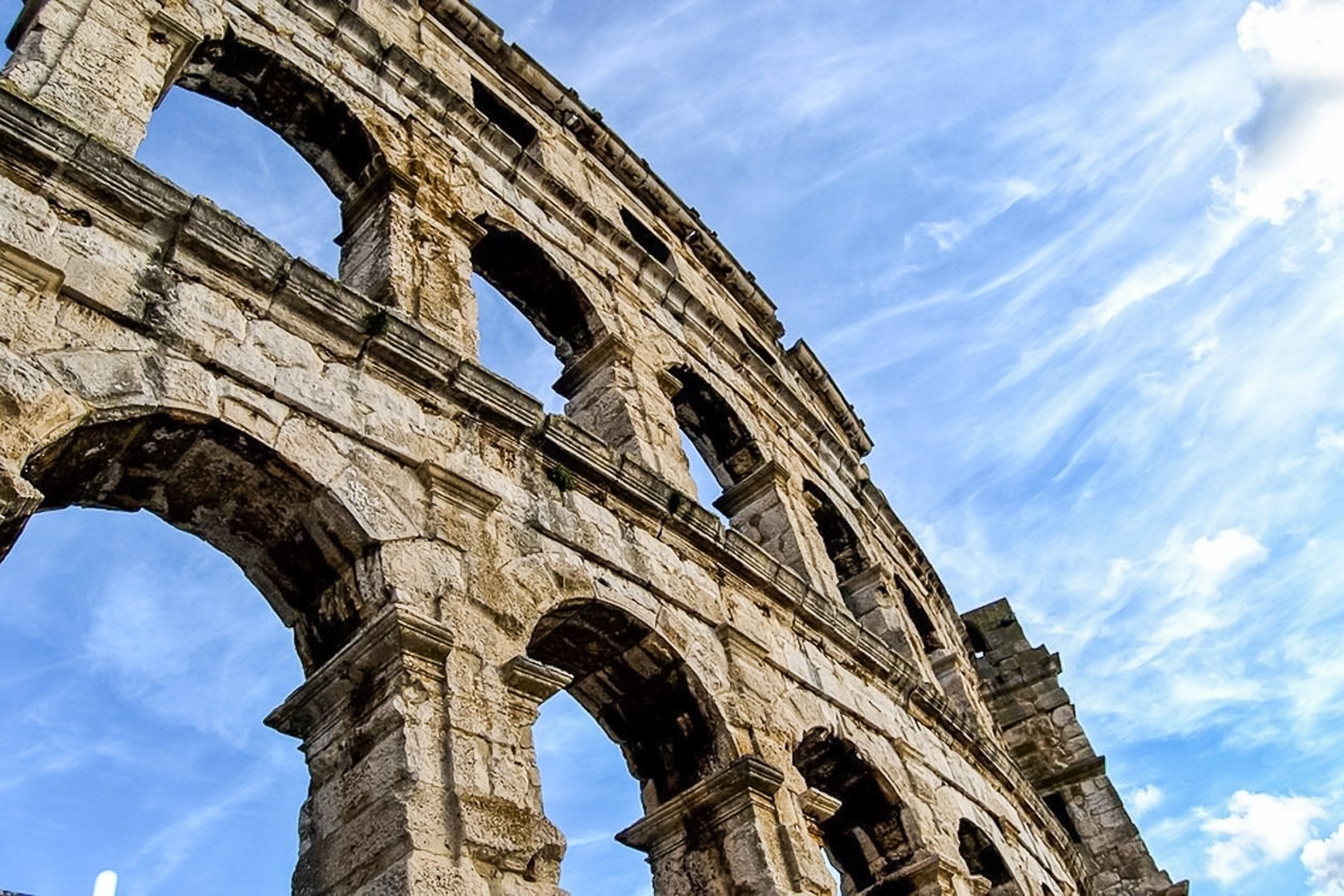
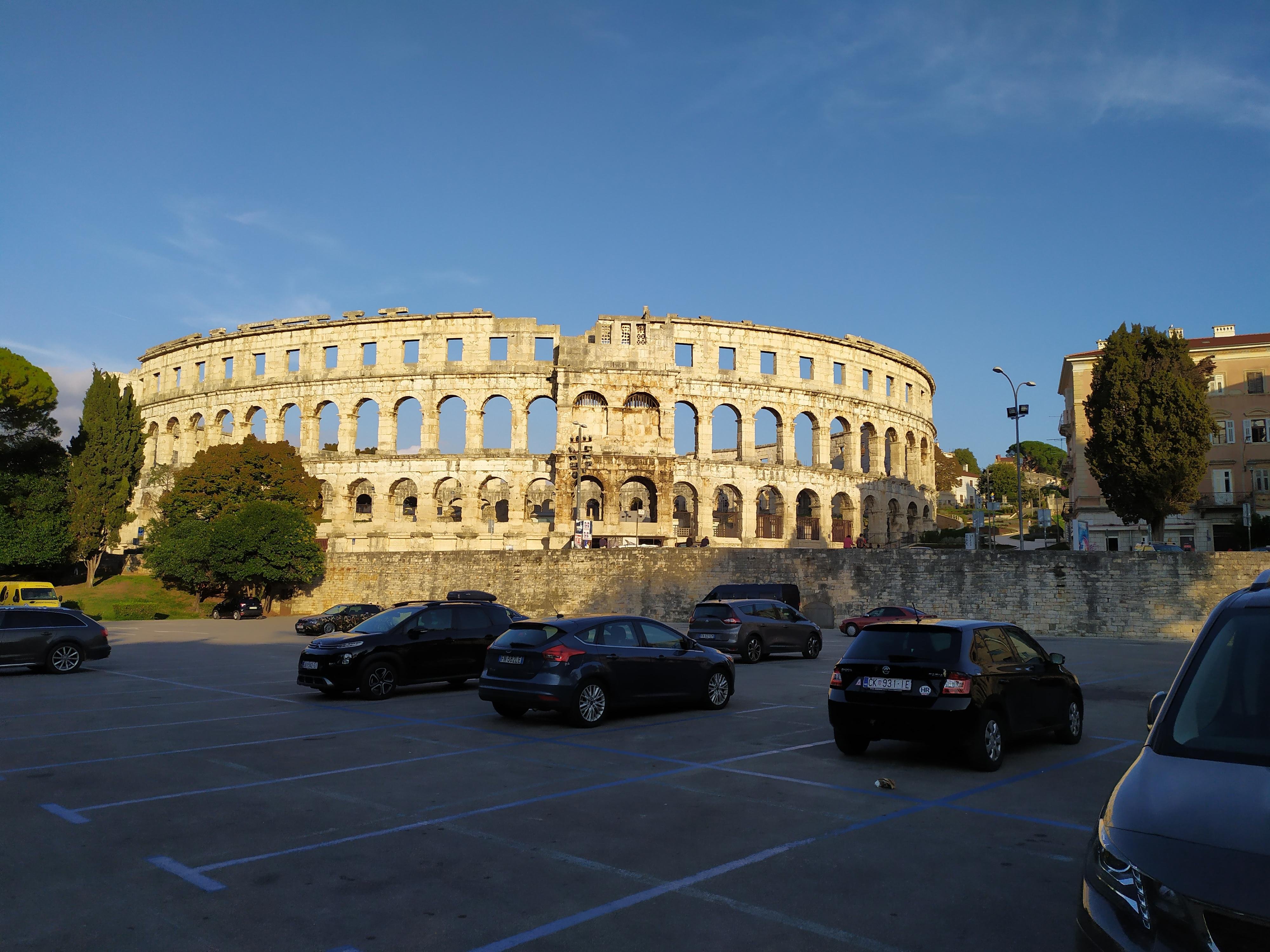
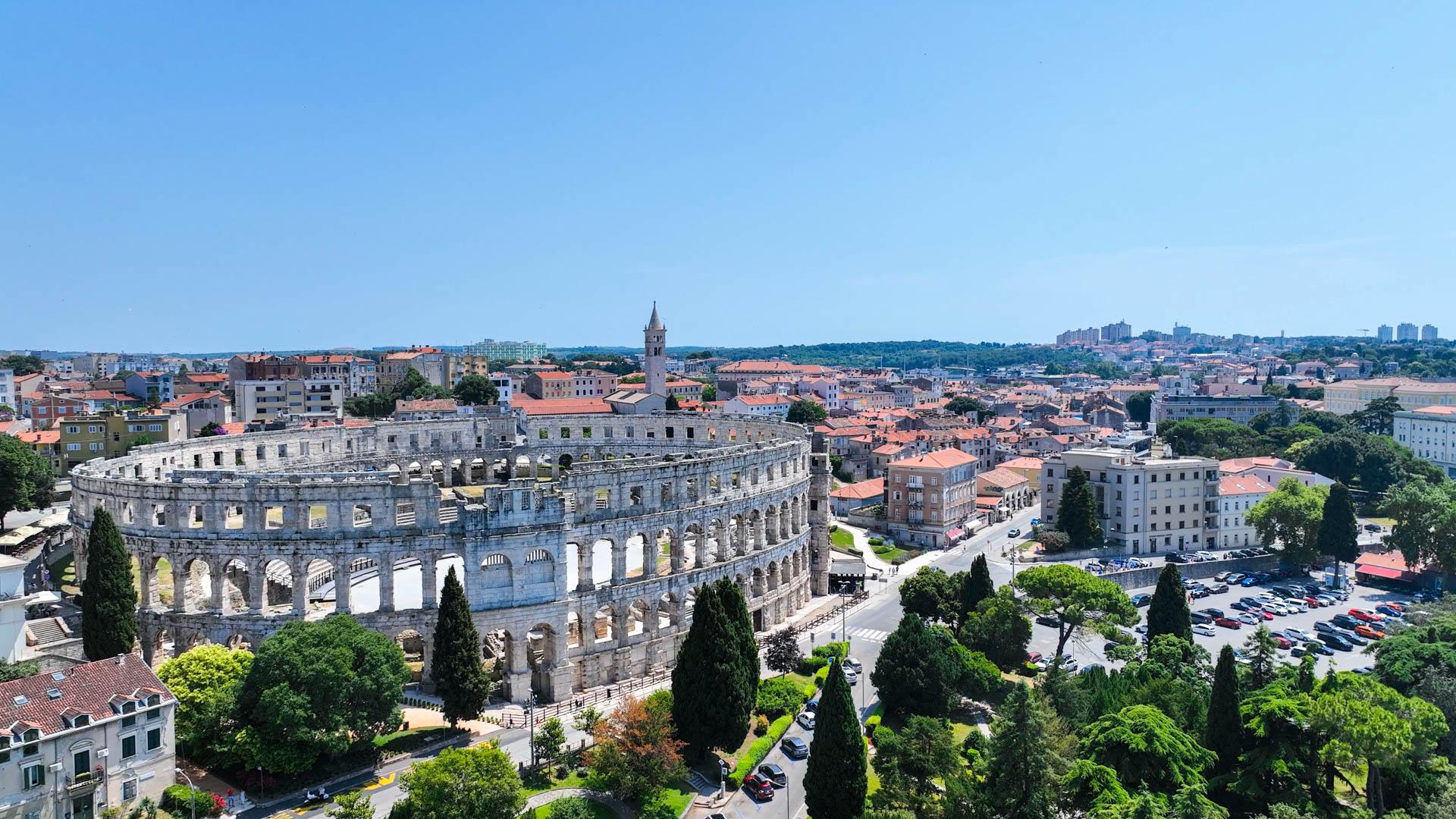
The Pula Arena holds 23,000 spectators in limestone tiers that have stood since the first century CE, making it the sixth-largest surviving Roman amphitheater and the only one in the world with all four side towers still intact. Emperor Vespasian commissioned the structure during the Flavian dynasty, the same era that produced Rome's Colosseum, and its elliptical plan measures 133 by 105 meters with outer walls rising to 32 meters. Unlike the Colosseum, whose marble facade was stripped over centuries, the Arena's Istrian limestone remains largely whole, preserving the original arcaded galleries and load-bearing arches that demonstrate Roman engineering at its zenith. The amphitheater served its original purpose until the fifth century, when gladiatorial combat was banned across the empire. Medieval Pula repurposed the structure as a quarry and grazing ground, but the Venetian Senate intervened in 1583 to halt further stone removal, recognizing the Arena's architectural significance three centuries before modern conservation doctrine emerged. Beneath the Arena floor, the underground passages where gladiators and animals awaited their arena entrance have been restored and opened to visitors, revealing wooden mechanisms, trap doors, and holding cells carved directly into bedrock. Today the Arena functions as both heritage monument and performance venue, hosting summer film festivals, opera productions, and concerts that draw 5,000 attendees per event. The site's dual role reflects Pula's identity as a working port city where Roman ruins coexist with shipyards and apartment blocks, not as isolated relics but as civic infrastructure woven into daily life. Securing amphitheater Pula tickets provides access to the arena floor, perimeter galleries, and underground network, with conservation fees supporting ongoing stabilization work on the outer arcade. The structure's coastal position, 200 meters from the Adriatic, has accelerated salt weathering in recent decades, making structural monitoring a permanent mandate. Archaeologists have documented gladiatorial graffiti scratched into corridor walls, including names of fighters, tally marks of victories, and crude drawings of combat scenes, offering rare direct testimony from the arena's operational centuries. The amphitheater Pula tickets tour options include guided walks that interpret these markings alongside the staging mechanics and seating hierarchies that governed Roman spectacles, where social rank determined proximity to bloodshed and senators occupied marble thrones at arena level.

"The only Roman amphitheater in the world with all four side towers still intact."
A step-by-step walkthrough of the visit — what you'll see, how long each stage takes, and the details that matter.
You arrive at Flavijevska Street as the morning light slants across the Arena's honey-colored limestone, and the outer arcade casts geometric shadows onto the pavement. Entry brings you through one of the original ground-level arches, where worn thresholds show grooves from two millennia of foot traffic. You climb the stone stairs to the upper gallery and find the entire ellipse spread below, 133 meters of open arena floor where sand once absorbed the blood of spectacles. Descending to the underground passages, you walk the same corridors gladiators used, reading graffiti scratched into walls by fighters awaiting their turn. The wooden trap doors and pulley channels that lifted animals and scenery into the arena have been reconstructed, showing the stagecraft behind Roman games. You emerge onto the arena floor and stand at its center, looking up at the tiered seating that once held 23,000 voices. The perimeter walk takes you through all four towers, each offering a different perspective on Pula's harbor and the Adriatic beyond. Conservation scaffolding on the eastern arcade reminds you this is an active preservation site, not a frozen monument. You exit through the northern gate as tour groups begin arriving, glad you chose the early window.
Yes, an entrance fee is required to explore the interior and underground exhibition of Pula Arena.
The entrance fee is 10 EUR per adult as a conservation fee.
We recommend using your amphitheater pula tickets between 08:00 and 10:00 to avoid peak heat and crowds.
You can use your amphitheater pula tickets to join various guided amphitheater pula tickets tours offered by local providers.
Allocate 45–90 minutes to fully experience the site with your amphitheater pula tickets tickets.