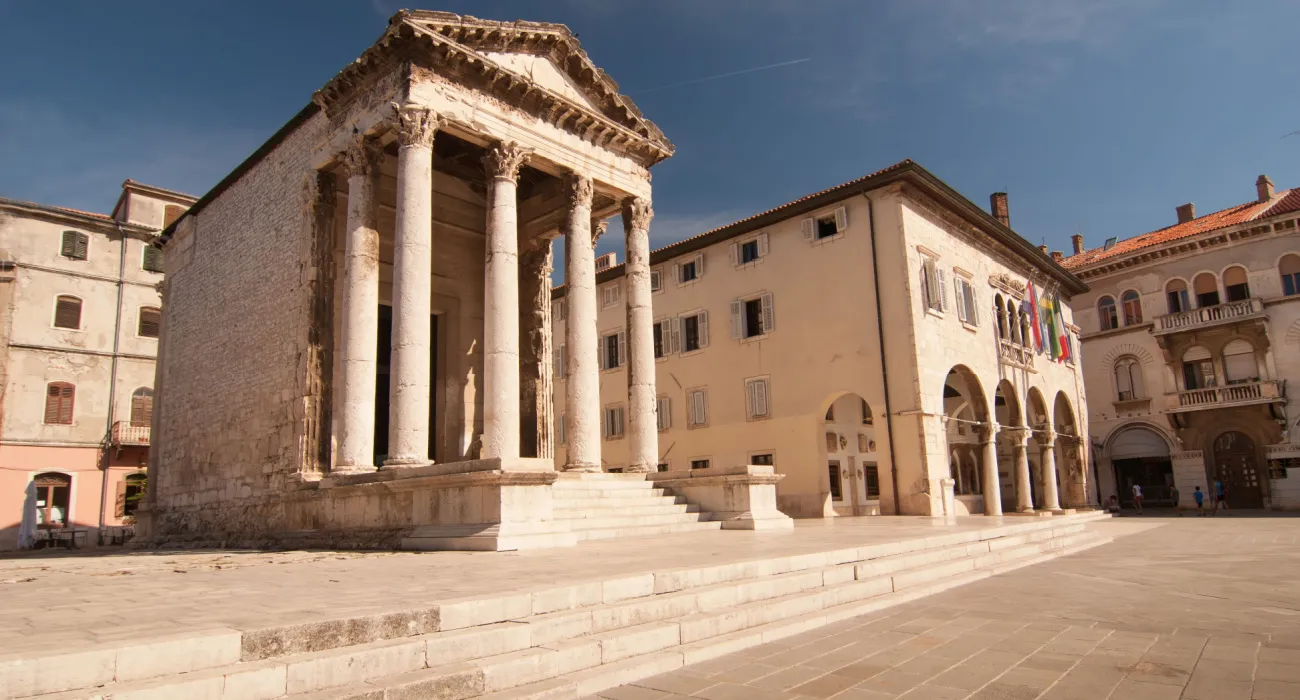
Temple of Augustus
10 min walk
Located in the historic Forum square, this well-preserved Roman temple offers a direct connection to the city's ancient administrative center.

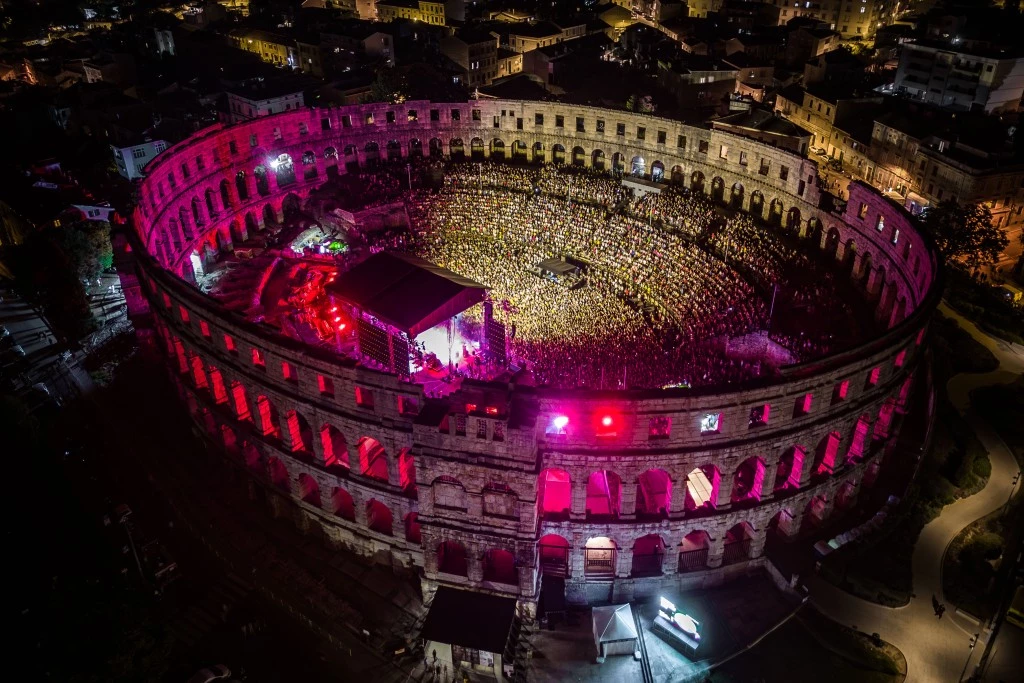
The Pula Arena hosts over fifty events each year, transforming the 2,000-year-old amphitheatre into a venue for international film festivals, opera under the stars, rock concerts, and historical re-enactments. The calendar runs from May through September, with most performances scheduled after sunset when the stone tiers cool and the Adriatic breeze arrives.
Quick answer
Pula amphitheatre events span film festivals, classical concerts, opera performances, contemporary music acts, and gladiator re-enactments from May through September each year. The Pula Film Festival occupies mid-July, while opera and classical concerts anchor the August schedule. Rock and pop acts typically perform in June and late summer, with re-enactments staged on select weekends throughout the season.
The amphitheatre's event season opens in early May with smaller chamber concerts and closes in late September after the final film screenings, bracketing a calendar that has grown from a handful of performances in the 1950s to more than fifty annual productions today. The stone seating holds 5,000 spectators, the same capacity it served during gladiatorial contests in the first century, though modern productions add temporary stages, sound systems, and tiered seating on the arena floor. Film screenings dominate the mid-summer calendar, with the Pula Film Festival presenting premieres and retrospectives against the amphitheatre's illuminated arches each July. Opera and classical performances follow in August, when the Croatian National Theatre and international orchestras stage works that capitalize on the venue's natural acoustics. Contemporary acts—rock bands, pop singers, electronic producers—fill the remaining weekends, drawing crowds that spill into the surrounding Flavijevska district after each show. Gladiator re-enactments run on select Saturdays from June through August, staged by historical societies that reconstruct combat sequences, armor, and weaponry from the arena's active centuries. These performances begin at dusk and last ninety minutes, offering the only events where visitors occupy the original stone seating without modern staging obstructing the floor. Ticket availability varies sharply by event type: film festival passes sell out weeks ahead, while re-enactment slots often remain open until the day before. The arena's event infrastructure includes portable restrooms near the northeastern entrance, a drinks pavilion along the western arcade, and a merchandise stand that opens two hours before curtain. No permanent food service operates inside the monument grounds. The standard daytime entrance fee grants access to the empty arena between events, allowing visitors to walk the corridors and climb to the upper tiers when no stage construction is underway.
“The stone seating holds 5,000 spectators, the same capacity it served during gladiatorial contests in the first century.”
The Pula Arena hosts a variety of cultural and musical performances throughout the year, with the peak season running from summer through early autumn. Visitors should note that event schedules change annually and may influence standard site access.
Reenactments of gladiator fights occur regularly throughout the summer, providing insight into Roman history. These performances are frequent during the warmer months and attract high visitor numbers.
This long-standing event transforms the arena into an open-air cinema showcasing national and international films. Expect larger crowds in the evenings and potential adjustments to standard daytime operating schedules.
Various international and domestic musical acts perform at the venue throughout these months. Planning travel around these dates is recommended, as tickets for popular shows often sell out in advance.
The Pula Amphitheatre maintains consistent operating hours throughout the week to accommodate visitors. These hours apply to general site access.
The Pula Amphitheatre is located at Flavijevska ulica, 52100 Pula, Croatia. It is situated on the edge of the city center and is easily accessible by various modes of local transport.
Local bus lines to Pula Bus Station (Autobusni kolodvor Pula)
Follow signs for Centar/Arena to reach parking near Flavijevska ulica
Direct drop-off at Flavijevska ulica
Follow signs for Arena from Pula city center
For those traveling by car, parking is available in nearby public lots, though spaces fill quickly during peak event times. Visitors are encouraged to arrive early to ensure a smooth transition to the entrance.
The best arrival window for visiting the Pula Amphitheatre is 09:00–10:30. Arriving during this period ensures fewer crowds and softer light for photography and site exploration.
—
Quiet conditions allow for detailed inspection of the underground passageways and seating levels.
—
Expect peak attendance during these hours as tour groups arrive.
—
Visitor numbers typically decline as the site approaches its 17:00 closing time.
Verdict: For the most comfortable experience, plan your visit between 09:00 and 10:30 on a weekday.
Extend your visit to Pula by exploring nearby historical landmarks situated within a short walking distance of the amphitheatre. These sites allow visitors to trace the city's Roman heritage and architectural evolution at a steady pace.
10 min walk
Located in the historic Forum square, this well-preserved Roman temple offers a direct connection to the city's ancient administrative center.
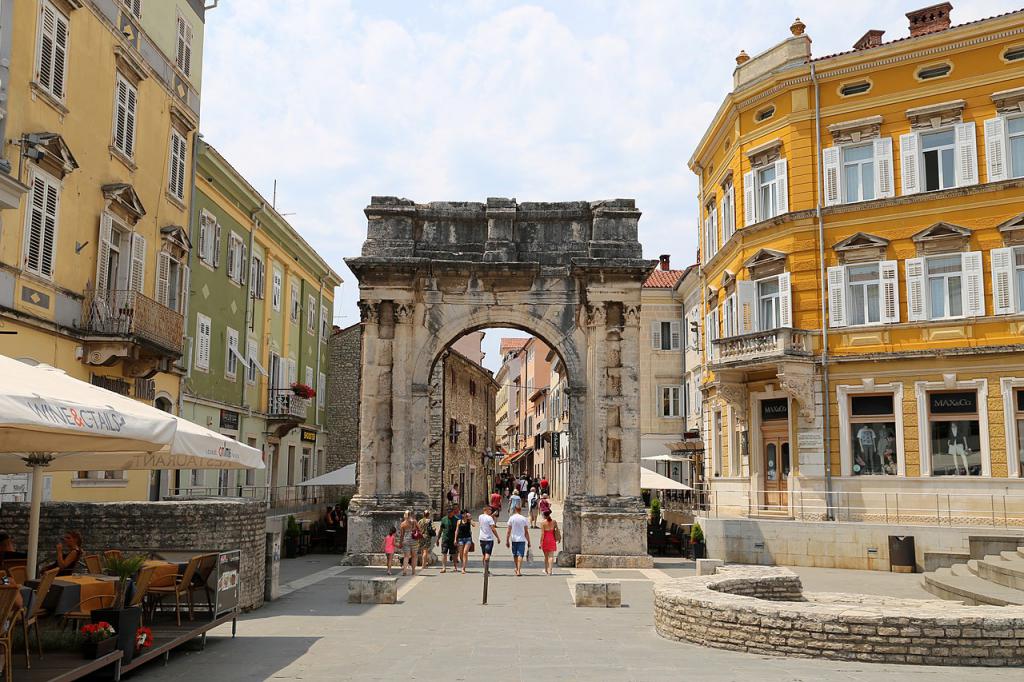
8 min walk
This triumphal arch stands at the edge of the old city and serves as an architectural highlight on the route from the arena to the center.
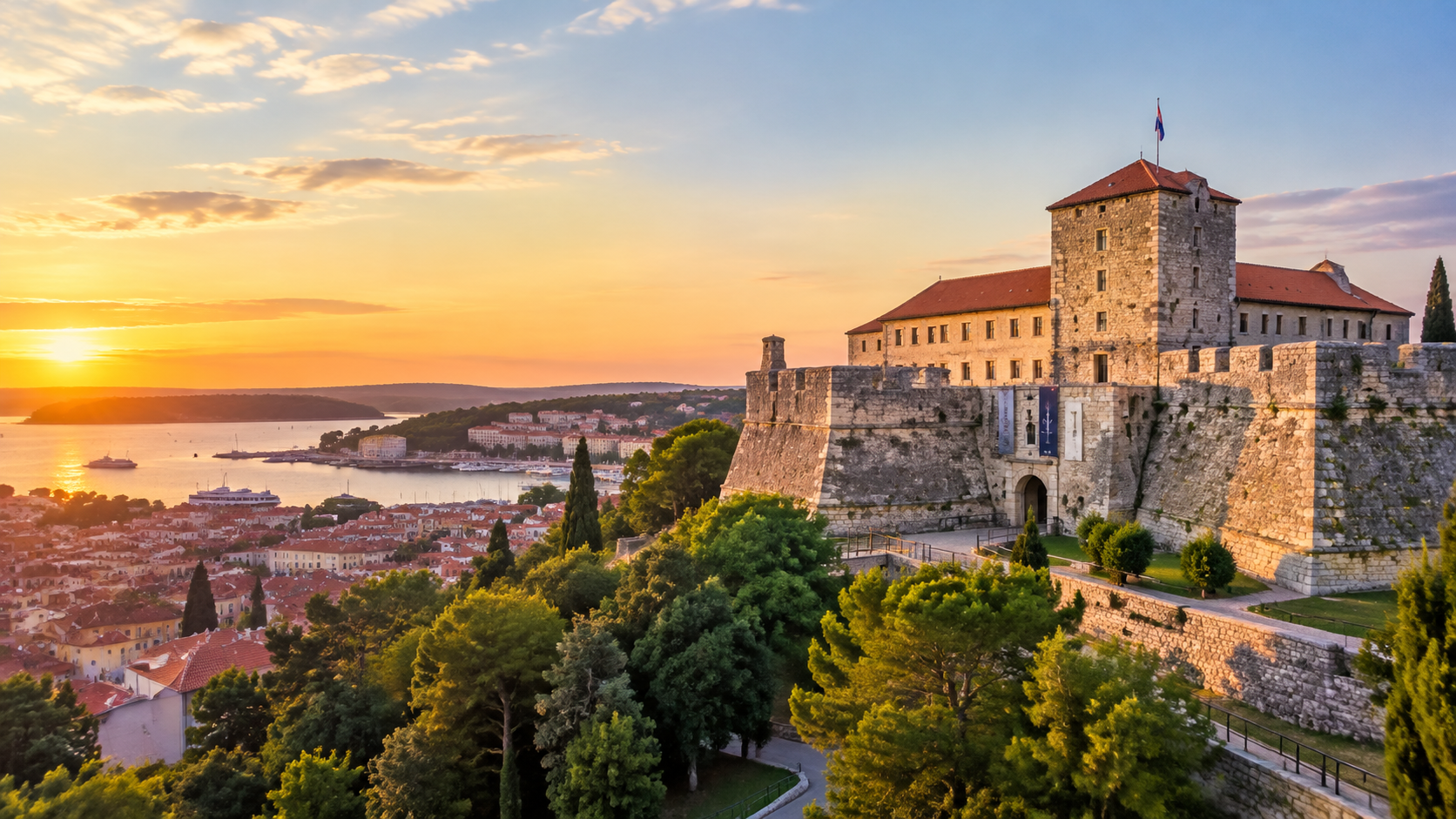
15 min walk
Positioned on the highest hill in the city, this Venetian fortress provides a different perspective on Pula and houses the Historical and Maritime Museum of Istria.
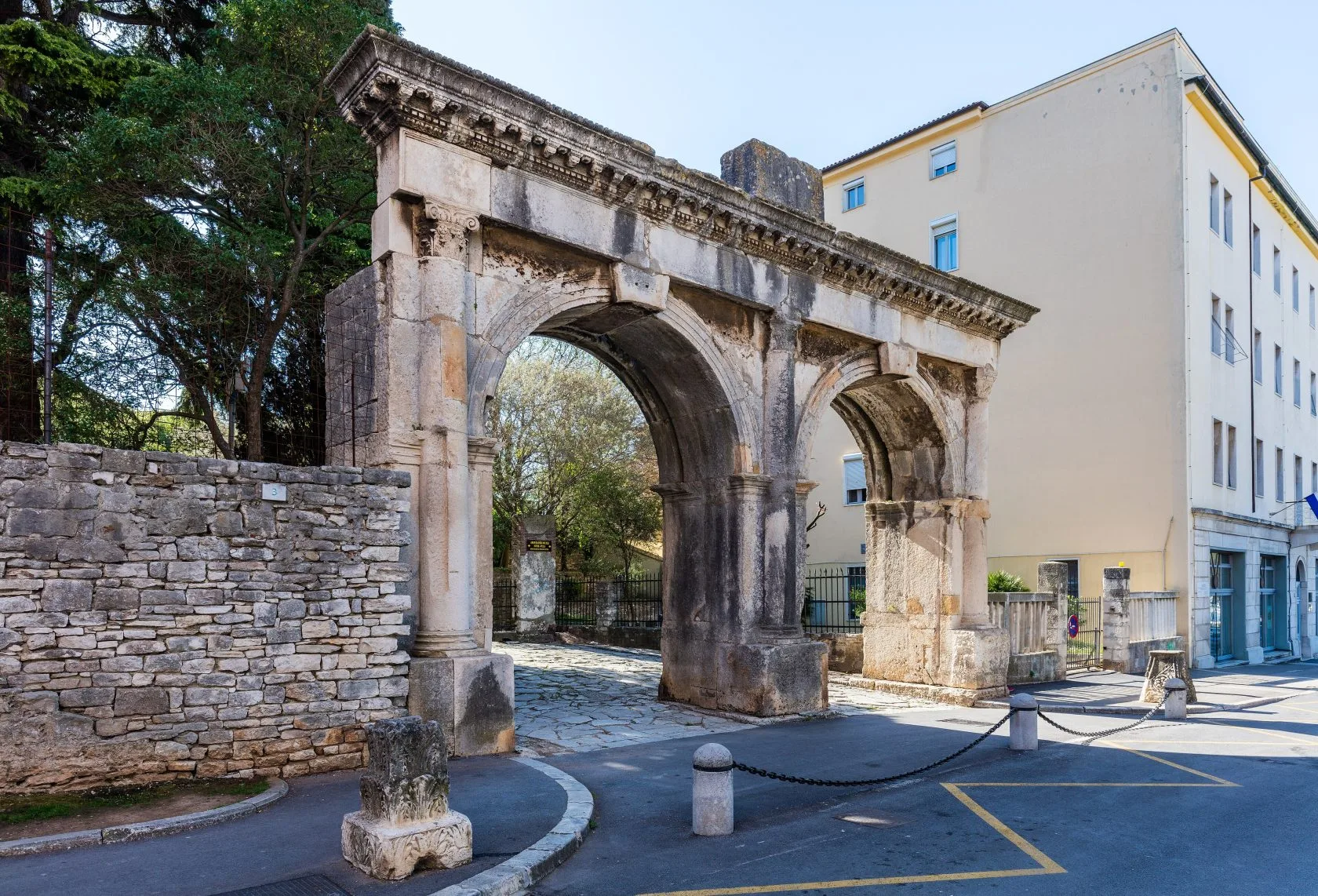
5 min walk
These Roman gates historically served as one of the entrances to the city and are located conveniently close to the Archaeological Museum of Istria.
Everything you need to know about pula amphitheatre events
The arena hosts a variety of cultural performances including film festivals, musical concerts, and historical reenactments. These gatherings utilize the ancient Roman architecture to provide a unique atmosphere for attendees.
Standard site entry fees differ from event-specific admission prices. Please check the official site for information on how specific programming impacts access to the Roman monument.
The official website provides the most accurate and up-to-date calendar for all performances. Consulting their listings ensures you have the correct information regarding dates and event logistics.
Event policies vary depending on the promoter and the nature of the performance. We recommend verifying the specific requirements for the show you wish to attend via the organizer's official channels.
For a seamless experience, we suggest arriving during the morning hours to explore the structure before the crowds arrive. This allows you to appreciate the limestone masonry and subterranean passages before evening festivities begin.
The monument remains open to visitors daily from 09:00 to 17:00, regardless of the performance schedule. You can explore the ground floor and underground galleries during these standard operating hours.