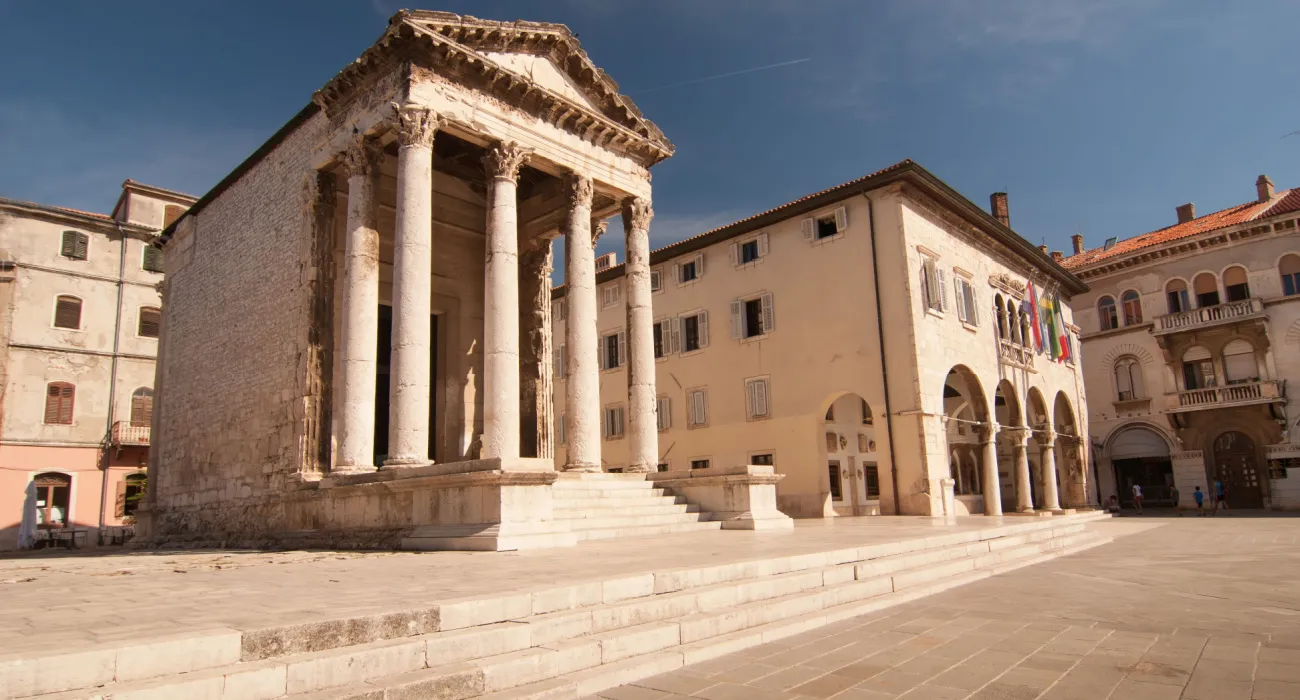
Temple of Augustus
10 min walk
Located in the heart of the Roman Forum, this well-preserved temple provides context to the city's religious life during the 1st century.

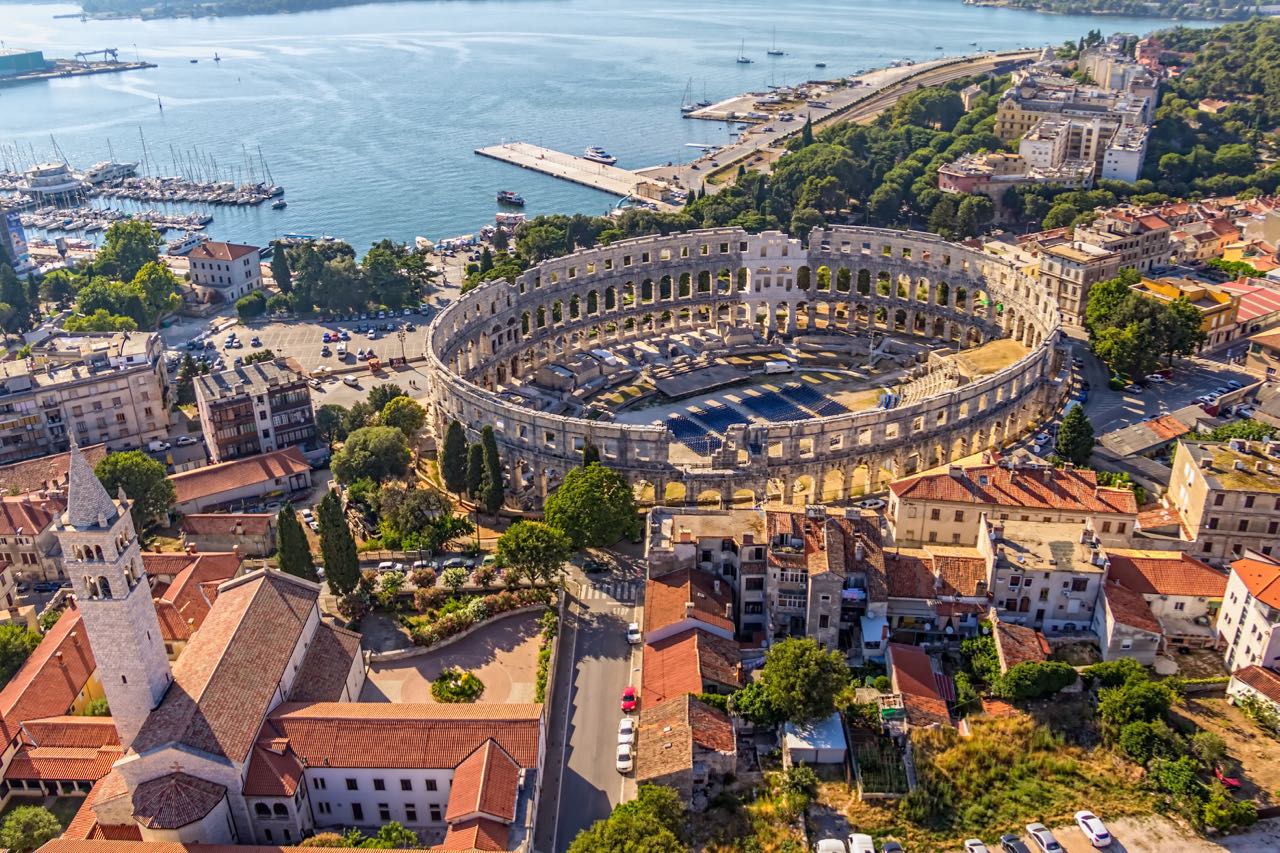
The amphitheater pula parken stands as one of six remaining Roman arenas with a complete outer ring of defensive towers. Built under Emperor Vespasian in the 1st century AD, the structure seats 20,000 and operates year-round as both monument and performance venue. This guide covers the practical details for planning your visit.
Quick answer
The amphitheater pula parken is open daily from 09:00 to 17:00, with a 10 EUR conservation fee per adult. The arena operates on this schedule throughout the year, including weekends and most public holidays. Arrive between 09:00 and 10:30 to avoid midday heat in the uncovered seating tiers and navigate the monument before tour groups peak. The site closes promptly at 17:00, with last entry typically 30 minutes prior.
The Pula Arena holds 23,000 cubic meters of limestone quarried from the nearby Vinkuran peninsula, transported by ship and ox-cart over a construction span that began around 27 BC and concluded under Vespasian. Its elliptical plan measures 132 by 105 meters, making it the sixth-largest surviving Roman amphitheater and the only one retaining all four side towers of its outer wall. These towers once anchored a velarium system—retractable canvas sails operated by sailors from the Adriatic fleet—that shaded spectators during daylight games. Today the arena functions as both archaeological monument and event space, hosting summer film festivals and opera performances on a stage built over the ancient arena floor. The underground passages, visible through metal grates in the central oval, once held gladiators, wild animals, and the mechanical lifts that delivered them into the arena. A permanent exhibition in the basement corridor displays amphorae, olive-press equipment, and trade artifacts from Istria's Roman period, contextualizing the amphitheater within the broader economic network that funded its construction. Visitors enter through the western gate on Flavijevska Street, where the ticket office occupies a modern pavilion. The self-guided route ascends the stone seating tiers, offering views across Pula's harbor and the cranes of the Uljanik shipyard. Signage in Croatian, English, and Italian marks the cavea sections—ima, media, and summa—that once segregated audiences by social rank. The climb to the upper gallery demands moderate fitness; the steps are uneven and without handrails in several sections. The amphitheater pula parken guide recommends a visit duration of 60 to 90 minutes for the monument itself, plus additional time if attending a scheduled performance. No café operates on-site, but the surrounding Verudela neighborhood offers trattorias and gelato shops within a five-minute walk. The arena's open-air design means weather dictates comfort—summer visits benefit from early-morning timing, while autumn and spring provide temperate conditions for extended exploration of the seating levels and tower interiors.
“The Pula Arena is the only surviving Roman amphitheater with all four defensive side towers intact.”
The Pula Arena maintains a consistent schedule throughout the week to accommodate visitors. The site is open daily from morning until late afternoon.
The best arrival window is 09:00–10:30 to avoid mid-day heat in the open-air arena and lower crowds. Visiting during these morning hours allows for a more comfortable exploration of the site.
Mild temperatures ranging 15°C to 22°C
These shoulder months offer temperate conditions suitable for walking the limestone corridors.
Hot, often exceeding 30°C
Expect heavy pedestrian traffic and significant sun exposure during peak afternoon hours.
—
Arriving early minimizes wait times and provides better access to the arena floor before tour groups arrive.
Verdict: The most favorable time for a visit is Tuesday to Thursday, arriving at 09:00, during the months of April or October.
The Pula Arena is located at Flavijevska ul. bb, positioned just outside the historic old town center. It is most easily accessed by local bus lines or on foot if staying within the city perimeter.
Local lines to Pula Bus Station (Autobusni kolodvor Pula)
Follow signs for Centar/Arena to reach Flavijevska ul.
Walk from Pula city center/Port via Istarska ulica
Drop-off point at the designated zone near Flavijevska ul.
Parking is limited in the immediate vicinity of the arena, so using the public bus station stop or public parking lots nearby is recommended. Arrive during the suggested morning window to navigate the surrounding streets with greater ease.
The amphitheater pula parken stands as one of six surviving Roman arenas with four complete tiers, built between 27 BC and 68 AD under Emperor Vespasian. Construction began during Augustus's reign to accommodate gladiatorial combat for Pula's 5,000 inhabitants. The oval structure measures 132 meters long and 105 meters wide, seating approximately 23,000 spectators across limestone tiers quarried from nearby Vinkuran. Engineers anchored the arena into a natural hillside slope, minimizing foundation work while maximizing stability. Four corner towers housed wooden machinery that hoisted stage sets and released animals into the combat arena below. Gladiatorial games continued until 404 AD when Emperor Honorius banned them across the Roman Empire. The arena transitioned to hosting medieval fairs and military tournaments under Venetian rule from 1331 to 1797. In the 16th century, local quarrying nearly destroyed the monument as citizens removed stones for construction projects throughout Pula. Austrian authorities halted demolition in 1709 and initiated the first preservation surveys in 1816. Restoration work accelerated after 1875 when the structure gained protected monument status. Today visitors walk the same limestone corridors Roman spectators used 2,000 years ago. The underground passages remain intact beneath the central arena floor, and three of the four original towers still stand at full height. Modern conservation efforts have stabilized the northern facade where quarrying caused the most damage, while the southern wall retains its complete Roman-era profile.
Emperor Augustus orders construction of the amphitheater to serve Pula's growing population and military garrison.
Emperor Vespasian completes the fourth tier and corner towers, bringing seating capacity to 23,000 spectators.
Emperor Honorius abolishes gladiatorial combat throughout the Roman Empire, ending the arena's original function.
Venetian Senate debates dismantling the arena to rebuild fortifications in Venice but local protests halt the plan.
Austrian Habsburg administration issues the first formal decree prohibiting stone removal from the amphitheater.
The Austro-Hungarian Empire designates the arena as a protected archaeological monument and begins systematic restoration.
Italian architect Luigi Maria Ugolini directs excavation of the underground chambers and original drainage systems.
Croatia inscribes the Pula Arena on its tentative UNESCO World Heritage list for outstanding Roman architectural preservation.
The Pula Arena is centrally located, making it easy to combine a visit with other significant Roman ruins and historical landmarks in the city center. These sites are within walking distance, allowing for a logical progression through Pula's ancient history.
10 min walk
Located in the heart of the Roman Forum, this well-preserved temple provides context to the city's religious life during the 1st century.
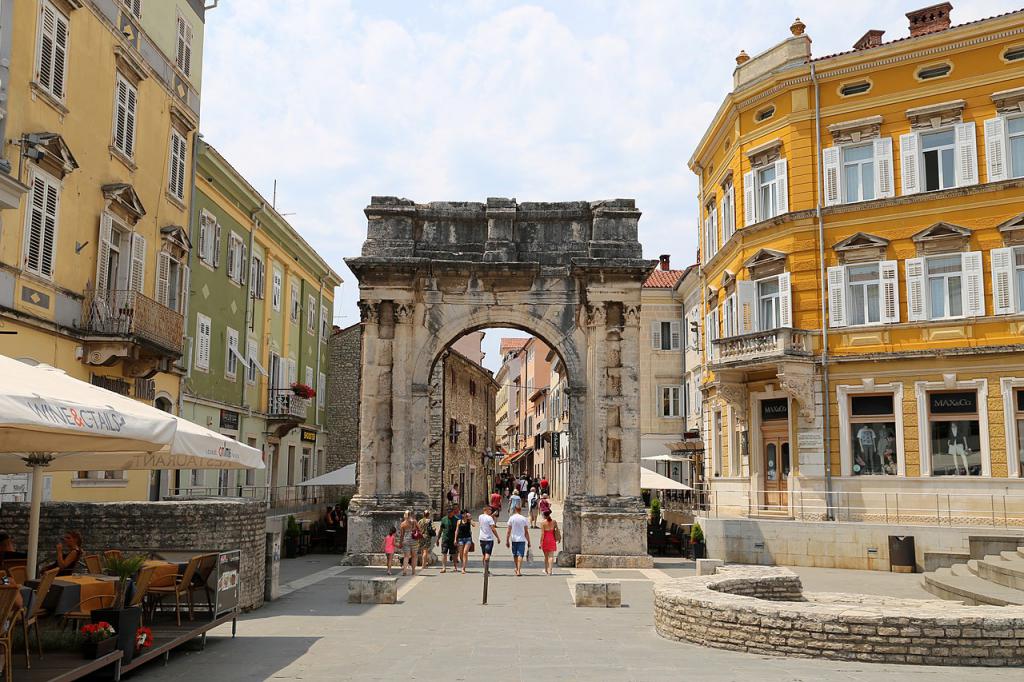
8 min walk
This triumphal arch marks the entrance to the old town and serves as a natural endpoint for a walking tour starting from the amphitheater.
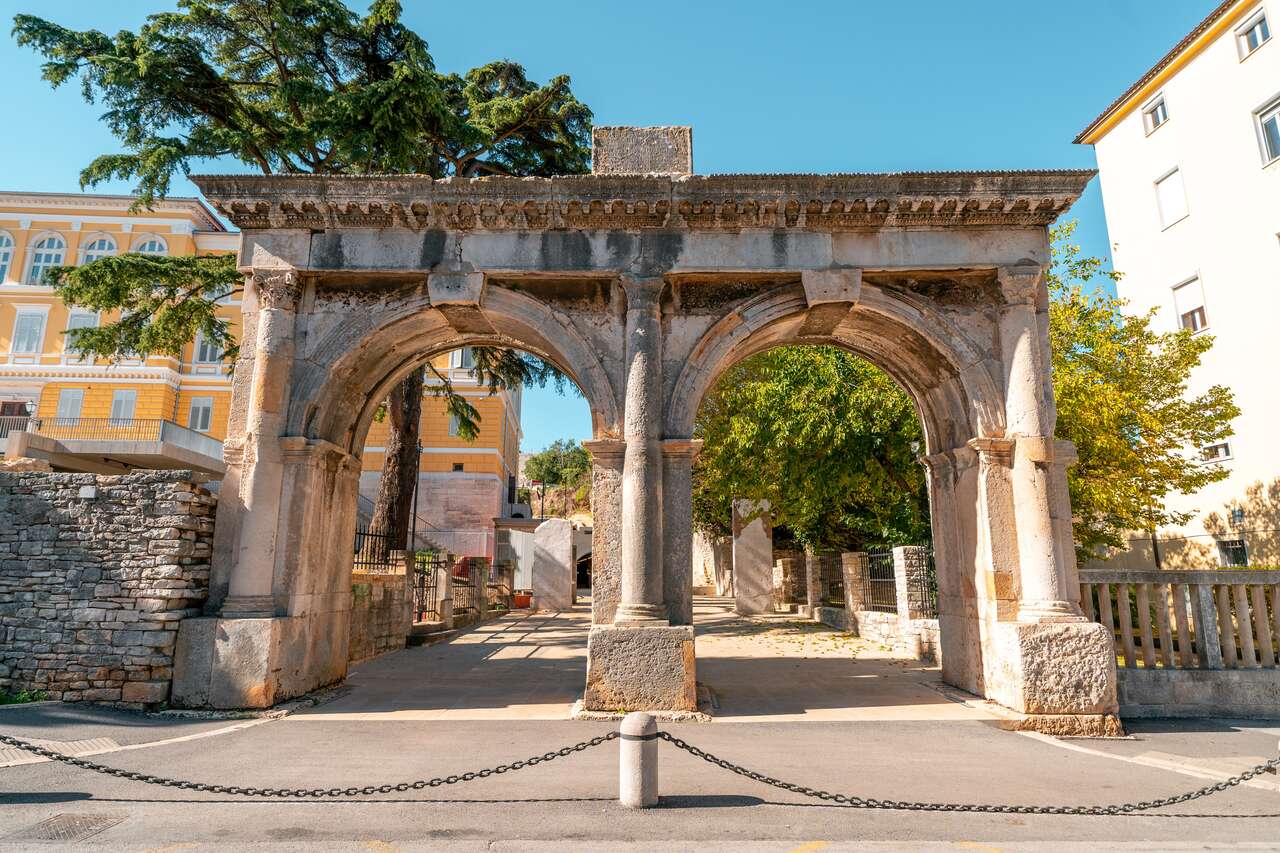
5 min walk
As a secondary entrance to the ancient city, these gates connect the amphitheater to the hillside archaeological areas.
7 min walk
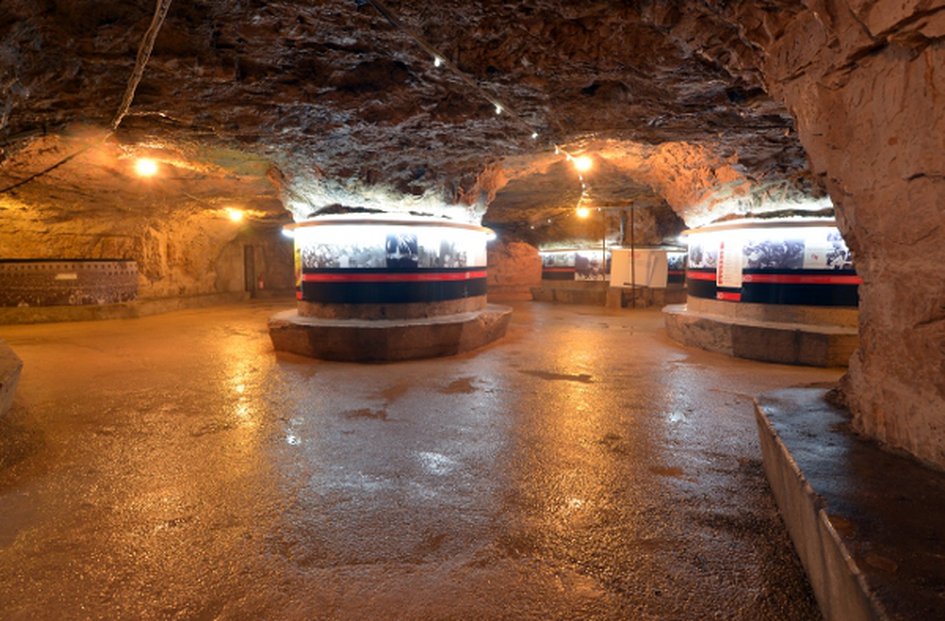
This network of underground tunnels built during the early 20th century offers a distinct contrast to the ancient Roman architecture nearby.
Everything you need to know about amphitheater pula parken
The entrance fee is 10 EUR per adult, which serves as a conservation fee for the amphitheater pula parken. Please note that this is the standard rate for entry.
The Pula Arena is open daily from 09:00 to 17:00, including weekends. These hours apply consistently throughout the week at the amphitheater pula parken.
To avoid the mid-day heat and large crowds, the best arrival window is between 09:00 and 10:30. Following this advice ensures a more comfortable visit to the amphitheater pula parken.
The site is located at Flavijevska ul. bb, 52100 Pula, Croatia. It is centrally positioned for easy access within the city.
Yes, families are welcome to explore the site, though visitors should remain cautious on uneven ancient stone surfaces. It provides an educational look at Istrian history for visitors of all ages.
For specific inquiries, you can reach the management at +385 52 219-028. Alternatively, visit the official site at https://www.ami-pula.hr for additional details.
This structure is a well-preserved Roman landmark, serving as a testament to the region's rich archaeological heritage. It remains one of the most significant pieces of architecture in the Mediterranean basin.